
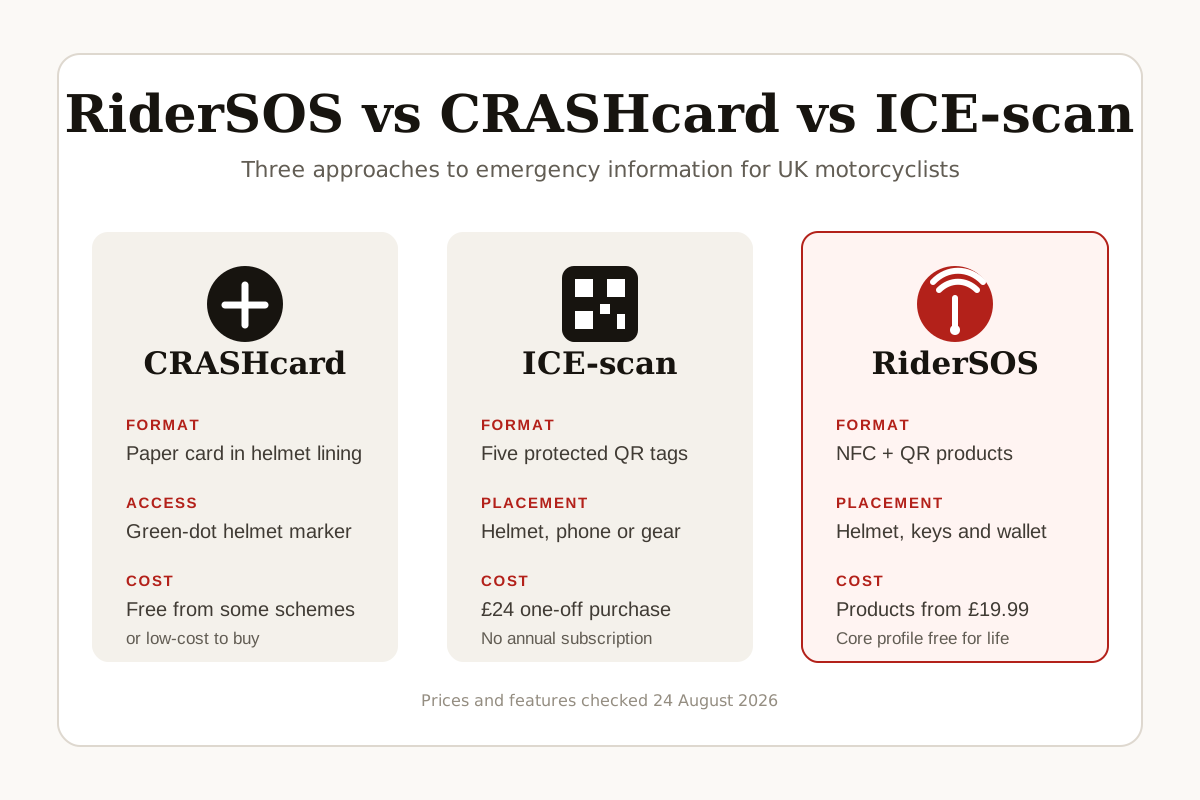
Feature-by-feature comparison
Scroll sideways to see the full table on a smaller screen.
| Feature | CRASHcard | ICE-scan | RiderSOS |
|---|---|---|---|
| What it is | A paper information card placed inside the helmet lining, identified by a green dot sticker on the helmet. | A set of five protected QR tags linked to an online profile and the free ICE-scan app. | NFC and QR products linked to a live RiderSOS emergency profile in the browser. |
| Current price | Free from some participating road-safety schemes, or £1 for a pack from DocBike. Availability varies. | £24 one-off for five tags. ICE-scan states there is no annual subscription. | Products from £19.99; helmet tag £24.99; RiderSOS Kit £49. Core profile free for life. |
| Updating details | Static. Rewrite or replace the paper card when information changes. | Update the profile in the app; ICE-scan says changes are available immediately. | Update the profile online; changes appear across every product linked to that profile. |
| Where it can go | Inside the motorcycle helmet, with a green dot marker on the outside. | Helmet, phone, security pass or another suitable surface. | Helmet, keys and wallet or jacket via a card; a separate Bike ID recovery tag is available for the motorcycle. |
| How it is accessed | A trained responder can spot the green dot and find the paper card within the helmet lining. | Reveal the protected QR code and scan it with a phone camera or QR reader. The app adds What3Words and export features. | Tap NFC or scan QR to open the profile in a browser. The person scanning does not need an app or RiderSOS account. |
| Ongoing fee | None. | None advertised; the tag pack is sold as a one-off purchase. | No fee for the core profile. Optional Pro membership adds extra features. |
| Notable strengths | Simple, inexpensive and supported by a number of UK fire, ambulance and road-safety initiatives. | Five QR access points, an updateable profile and enhanced location/export tools in its app. | NFC plus QR, multiple rider access points, field-level privacy controls and a separate Bike ID profile option. |
CRASHcard
The deliberately low-tech option: inexpensive, visible and readable without a phone, but limited to the helmet and manually updated.
ICE-scan
An updateable QR-based profile supplied with five tags. Standard scanning works without its app; some enhanced tools use the free app.
RiderSOS
A browser-based emergency profile reached by NFC or QR from products carried on the helmet, keys and in a wallet or jacket.
What each option is designed to do
All three systems try to solve the same basic problem: a rider may be unable to explain who they are, who should be contacted, or what information could help at the roadside. The important distinction is not whether one system cares more about safety. It is how the information is stored, where it can be found, and what has to happen before someone can read it.
CRASHcard keeps the information physically inside the helmet. ICE-scan uses protected QR stickers pointing to an online profile. RiderSOS uses NFC and QR products linked to a browser-based profile. That means the choice is less about a single winner and more about whether you value a paper fallback, several QR stickers, NFC access, multiple carrying locations, or some combination of them.
CRASHcard: simple, visible and intentionally low-tech
CRASHcard is the simplest of the three. The rider fills in a paper card, places it between the helmet lining and shell, and adds a green dot sticker to the outside. Fire and road-safety services that promote the scheme tell responders to look for that marker. It does not need a charged phone, a data connection, a QR reader or an account, which is a real advantage rather than a technological shortcoming.
The trade-off is that the information is static. If a contact number, medication or condition changes, the rider must remember to rewrite or replace the card. It also concentrates the information in one place. Bystanders should not remove an injured rider's helmet simply to search for a card; helmet handling should follow the 999 call handler's guidance or be left to trained responders.
ICE-scan: an updateable QR profile with optional app features
ICE-scan sells five QR tags linked to an updateable online profile. Its current UK information lists the set at £24 as a one-off payment and explicitly says there is no annual subscription. That corrects an older claim sometimes repeated in comparisons. The company suggests placing the tags on items such as a helmet, phone or security pass, so it is not accurately described as a bike-only product.
A person can reveal a tag's protected QR code and scan it with an ordinary phone camera or generic QR reader. ICE-scan says its free app is needed for enhanced What3Words and export functions, not for every basic scan. The protective flap helps keep personal data from being casually visible, although it introduces a physical reveal step before the code can be scanned.
RiderSOS: multiple NFC and QR access points
RiderSOS links physical products to a live emergency profile. A compatible phone can tap the NFC chip or scan the printed QR code, and the profile opens in the browser. The person scanning does not need to install an app, create an account or sign in. The rider can update the profile online, and the same changes are then reflected by every RiderSOS product linked to it.
The range is designed around several likely access points: a helmet tag, a key tag and an emergency card for a wallet or jacket. A separate Bike ID profile can be used with a recovery tag on the motorcycle. Riders choose which profile fields are visible, and the core rider profile remains free for life; optional Pro membership is for additional features rather than basic emergency-profile access.
Which motorcycle emergency ID should you choose?
Choose CRASHcard if you want the cheapest and most direct paper option, and you are comfortable checking it whenever your details change. Choose ICE-scan if five small QR tags and its app-based location tools suit the way you carry your gear. Choose RiderSOS if you want both NFC and QR access, a browser-first scan experience and products distributed across your helmet, keys and wallet or jacket.
These options do not have to be mutually exclusive. A paper CRASHcard can sit inside a helmet while a digital tag provides an updateable route to information elsewhere. Whatever system you use, keep the details current, test access periodically and make sure an emergency contact knows they have been named. An emergency ID supports the information handover; it does not replace calling 999, professional medical assessment or suitable rider training and protective equipment.
How this comparison was checked
Prices and features were checked against public provider and UK road-safety pages on 24 August 2026. CRASHcard availability and cost vary between participating organisations; the table uses DocBike and fire-service guidance as examples. ICE-scan details come from its official FAQ and product explanation. RiderSOS prices reflect the current RiderSOS catalogue.
Providers can change prices, bundles and features after publication, so follow the source links below before buying. We have separated verifiable product differences from opinion and avoided claiming that any system is universally recognised by every emergency service. The most useful emergency ID is one that is correctly set up, easy to find and kept current.